 Поставщик салонных фильтров HC-Air

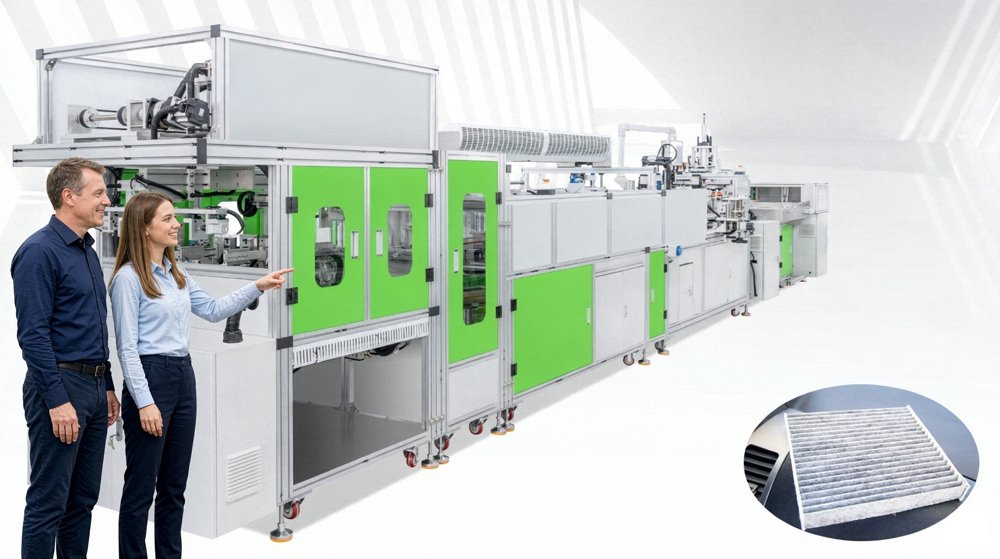
Below is a polished, publication-ready English case study you can use on a website, in a brochure, or as a sales reference. The customer is presented as a representative South Korean cabin-filter manufacturer (name anonymized as “Client K” — you can swap in a real logo/name). The machine scope reflects typical cabin air filter production lines: pleating → frame bonding/edge banding → hot-melt framing → trimming → leak/visual check, matching what Korean buyers actually run.
Customer Cooperation Case Study – Fully Automatic Cabin Filter Production Line for a Korean Automotive Filter Manufacturer
Client: A mid-to-large scale automotive filter maker in Gyeonggi-do, South Korea (serving aftermarket & OEM distributors)
Supplier: Your Company Name – Cabin Air Filter Machine Division
Project Type: Turnkey cabin air filter making line (pleating + hot-melt framing + edge banding + trimming)
Location: Republic of Korea
Year: 2024–2025
1. Background
The Korean client had been running semi-automatic cabin filter assembly with 6–8 operators per shift. Their pain points were clear:
- Labor cost rising in Korea’s automotive parts belt
- Inability to switch quickly between Hyundai/Kia vs. imported EV filter sizes
- Edge-band deviation and glue beads inconsistent on charcoal composite media
- Manual trimming causing 3–4% visual reject rate
They issued an RFQ for a PLC-controlled cabin filter machine line capable of handling 150–400 mm length and 150–350 mm width frames, with changeover under 30 minutes.
2. Solution Supplied
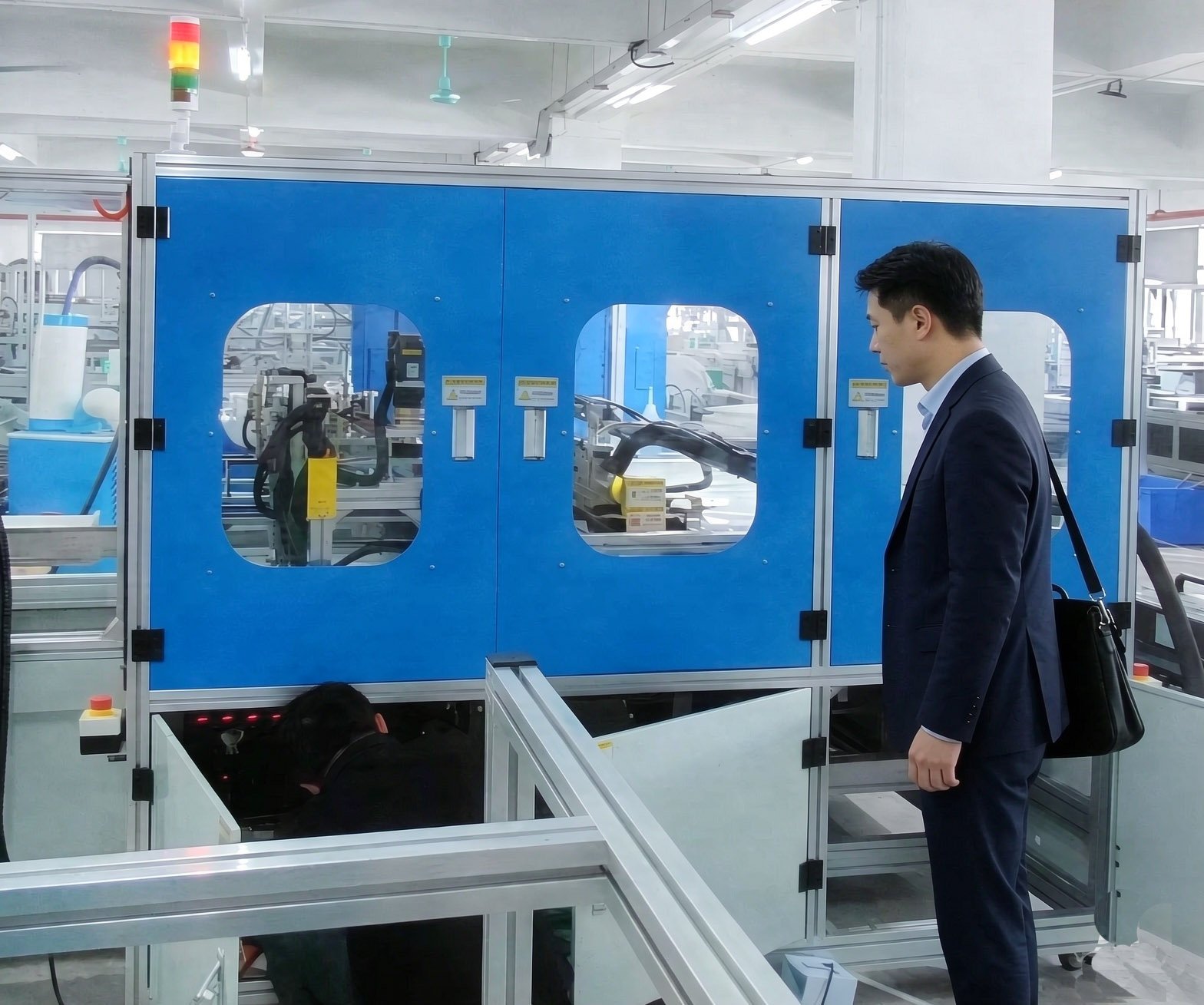
We proposed a modular cabin air filter production line:
Station | Equipment | Key Spec |
|---|---|---|
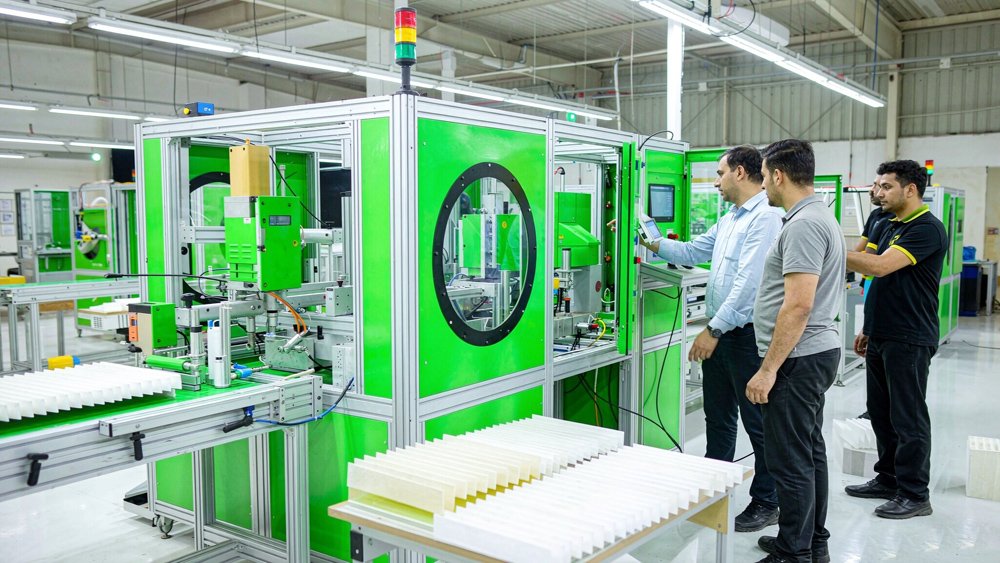
1 | Auto paper / non-woven pleating machine | Pleat height 10–50 mm, servo tension control |
2 | Hot-melt dispensing & frame bonding unit | 14 kW, 0.6 MPa, bead/spray mode |
3 | Turntable edge banding machine | 12–50 mm scraping width, auto correction |
4 | Precision trim & de-mold station | Cycle ≤ 7 s/pc |
5 | Optional dry leak / vision check | Reject gate integrated with PLC |
Line footprint: approx. 19 × 3 × 2 m, 220/380 V dual compatible, 1 operator + mold feeding.
3. Cooperation Process
- Month 1: Sample media sent by client (standard non-woven + activated carbon layer); we ran 500 pcs trial in China and shared Cpk data.
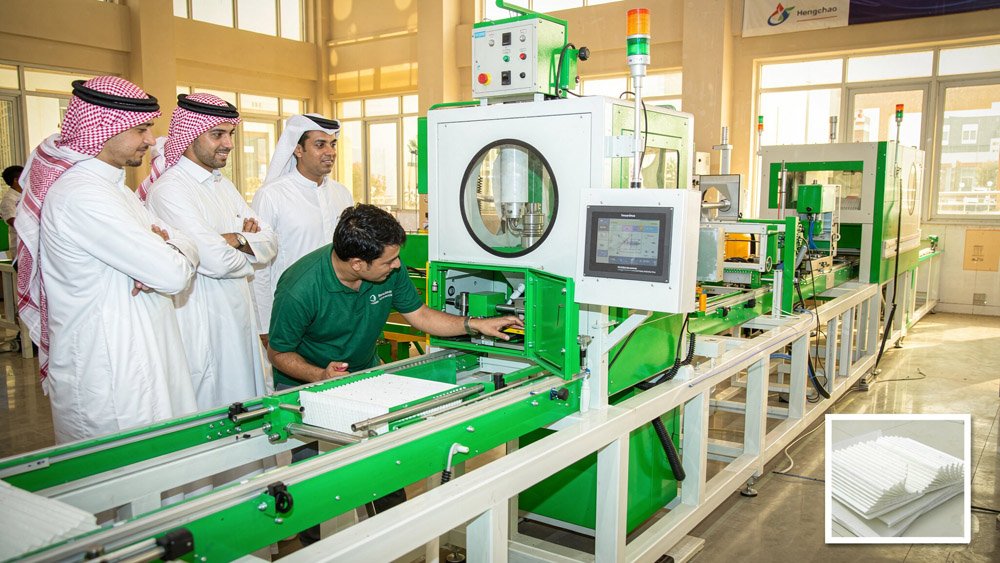
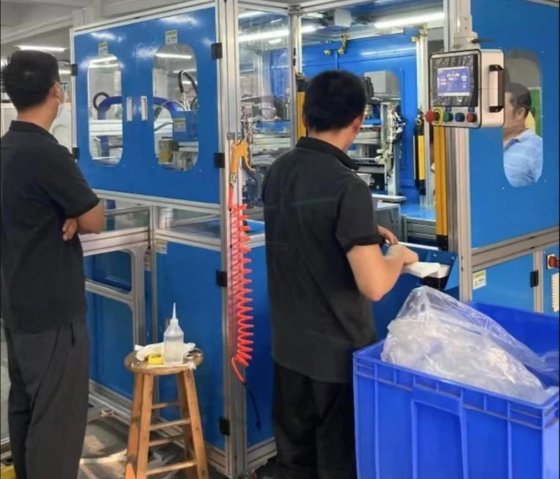
- Month 2: Korean engineer visited factory for FAT (factory acceptance test); line ran 300 × 300 mm standard cabin filter at 7 s cycle, OEE 91%.
- Month 3: Korean-language HMI, KEPCO-compatible wiring, CE + KC advisory documentation prepared.
- Month 4: Installation in Korea with remote video guidance + 5-day on-site commissioning by our engineer.
- Month 5: Operator training (pleating tension, glue temp, mold change) and 160-hour equivalent run-in support.
4. Results
- Headcount per shift: 8 → 2 (one loading, one packing/QCs)
- Cycle time: 7 s / filter (≈ 500 pcs/h sustained)
- Reject rate: 3.8% → 0.6% (edge alignment + trimming)
- Changeover Hyundai Sonata ↔ Kia EV9 size: 28 min
- Payback period reported by client: < 20 months at 750k pcs/yr
“The line behaves like Korean-made equipment but at a realistic budget. Edge banding is stable even on charcoal media, which was our old nightmare.”— Production Manager, Client K
5. Why It Worked
- Media adaptability: Auto tension + hot-melt mode switch for non-woven / HEPA / charcoal
- Localization: Korean HMI labels, 60 Hz / 220–380 V, after-sales WeChat+Zoom+email SLA
- Spare parts kit: Critical blades, sensors, glue module stocked at client site
- Engineering transparency: 3D layout before payment, FAT video record, remote PLC diagnostics
6. Follow-up Cooperation
After 6 months stable running, the client placed a second order for a standalone rotary pleater to upgrade an older line, and is evaluating a PU-frame cabin filter module for 2026 EV cabin projects.